
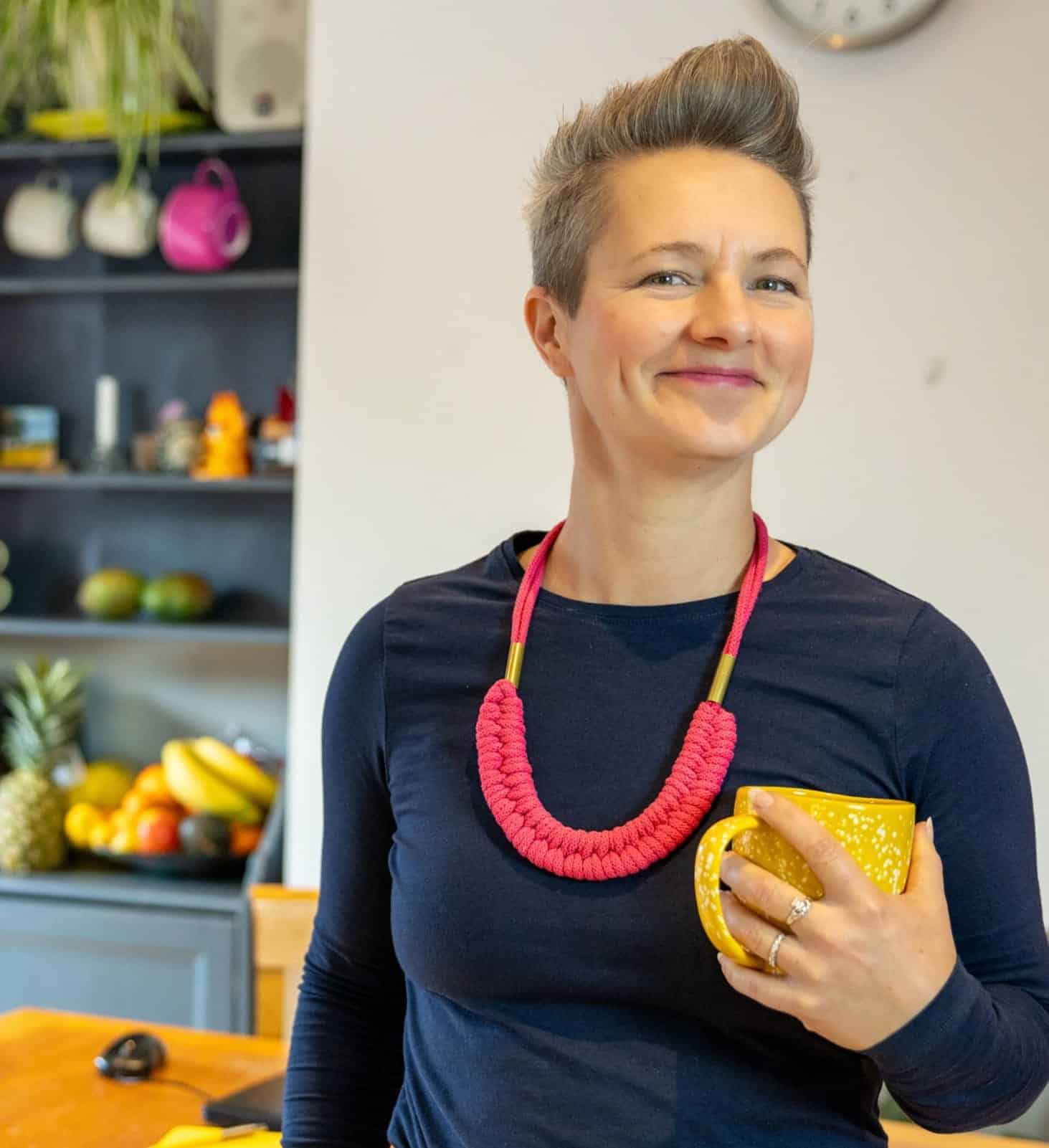

I find working with my IBS clients that many people get worried about eating fruit due to their sensitive digestion. If you have been avoiding fruits for ages you may be wondering whether you could, or should, be bringing it back in to your diet again.
Why do fruits trigger IBS?
Firstly, let’s look at why fruits might be an issue if you have IBS.
Your reaction to fruits could be caused by the natural sugars and / or the fibre levels. Some foods contain highly fermentable carbohydrates which can trigger bloating, gas, diarrhoea or stomach pains. These fermentable carbs are referred to as FODMAPs (read an introduction to FODMAPs here if you want the background).
Many fruits contain high levels of fructose, and others are high in a sugar alcohol called sorbitol.
- Read more about Sorbitol foods
These FODMAPs aren’t unhealthy, and shouldn’t be avoided long term, but if you’re figuring out what’s causing your symptoms you could look at how much fruit you are eating.
The key to the low FODMAP diet is portion sizing. It’s normally ok to eat a moderate size portion of fruits, but if you were to eat a whole punnet of cherries then you might start to notice some gas, diarrhoea or pains.
It’s also important to do the reintroduction phase of the low FODMAP diet, where you run mini experiments on yourself to identify what your triggers could be.
Benefits of eating fruits when you have IBS
Let’s not immediately cast fruit out of your diet!
Fruit is a good source of healthy fibre, vitamins and antioxidants and most people in the UK just aren’t eating enough. However, as I mentioned above, it’s not always easy to avoid symptoms when you have IBS.
So, back to the fruit! What can you actually eat?
What fruit can you eat if you have IBS?
Here are some examples of low FODMAP fruit portions that shouldn’t create too much bloating or gas:
- Blueberries – up to 120g
- Kiwi
- Oranges, clementines, tangerines
- Rhubarb
- Raspberries – up to 60g
- Strawberries – up to 65g
- Greenish bananas
- Pineapple
- Honeydew melon – up to 90g
- Papaya
- Lychee – up to 90g
A portion of fruit is normally around 80g, so you wouldn’t necessarily want to eat a huge amount of some of these fruits anyway.
I suggest to my clients to aim for 2-3 portions of fruits per day.
What fruits to avoid when you have IBS
The highest FODMAP fruits that tend to trip people up are:
- Apples (Read more: How to eat apples with IBS)
- Pears
- Stone fruits including peaches, plums, nectarines and apricots
- Watermelon
- Grapes
- Mango
- Guava
- Cherries
- Dried fruits such as figs, raisins, mango, pineapple, or dates
Everyone’s digestion is different, and everybody’s experience of IBS is different.
You might be able to eat these fruits and have no issues at all, in which case you shouldn’t avoid them.
But you may find they make your IBS worse. The only way to know is to test the foods, one by one. And even if you react to a fruit, it doesn’t mean you can’t eat it ever again. You need to keep retesting to try to expand your diet.
My top aim for my Gut Reset clients is to help you all eat as broad a diet as possible.
If you’d like a plan to reintroduce foods back to your diet I can help you enjoy eating out at a restaurant again, without spending all night in the bathroom!

IBS Nutritionist
Hi, I’m Anna Mapson, registered Nutritional Therapist.
I help people with IBS and SIBO get control of unpredictable gut symptoms to find long term relief from painful and embarrassing IBS without restrictive dieting.
I can help you to:
- understand your digestion better, so you recognise your triggers
- eat a well balanced diet, with tasty meals that are simple to prepare
- reintroduce your trigger foods so you can get back to enjoying food again
Find more about my 3 month 1:1 Gut Reset programme.


7 comments
Darla Drew
Is it normal to have dizziness before you have a episode of IBS after episodes in morning mostly I have 3 times diahreah and feeling drained skip a day or two of the episodes of diahreaha then right back again it’s like a pattern afterwards weak but next days feel fine then starts back over again .
Karen Williams
I suffer from anxiety. I spoke to my doctor to see if I had IBS and he said more likely but he can’t do anything because of my anxiety what can I do or take. It’s getting me down and it’s affecting my life kazz
Jane
My anxiety and stress caused my IBS. You have to avoid certain foods so you won’t have a flare up. You need medication for your anxiety.
Florence Wee
Was it normal to have diarrhea everyday with IBS? And weight loss too? Thank you.
Anna
Hello Florence, yes it can be normal to have diarrhoea everyday when you have IBS, but it’s not good, and it can be reduced. Have you heard my podcast? I have episode 79 about frequent bowel movements that might be helpful, you can listen here – https://player.captivate.fm/episode/6cc8f7f6-79ed-4d91-bb3c-381d33d83889/
Kim Watts
Thanks I need know if eat my food vegan meat products
Sharon Finley
I found after 78 yrs sorbetol is just aweful in so many foods my husband found it was causing lots of episodes due to the companies using it in foods.I try things first. Good luck maybe they’ll find a cure. I hope in my life time. Sharon